
Outdoor STEM/STEAM Activities Round-Up (Updated for 2026!)

Updated: Sep 18
Parents! Need to get your preschool and elementary age kids outside over school break? Get their wiggles out and activate their minds with these outdoor STEM/STEAM activities for young kids!
There's plenty of ideas here for parents to get kids outside during spring break or summer break. Or for teachers to get kids learning outside of the classroom.
Click on the links below to jump to a specific activity, or scroll down to explore all my ideas for easy, no-prep or low-prep outdoor kid fun with STEM & STEAM!
Outdoor Movement STEM Activities for Kids

Make a migration obstacle course!
DIY version from Science World
Printable version from Survive the sound
Migrate like salmon through an obstacle course filled with waterfalls, dams, predators, and fishers.
I love this activity because it gets kids active and moving, and can easily turn into independent pretend play! Plus it’s easy to modify for your circumstances. You could play this indoor with string or jump ropes to outline the migration corridor, and stuffies and furniture as the obstacles. Or you can play this outside with chalk to draw the migration corridor and obstacles. I can see this working for just one kid or groups of kids as well. I love the idea of migrating multiple times, each time adding a new obstacle for your kids to navigate.

And don’t miss these fun migration science books and videos to bring your obstacle course to life for kids!

From Pre-K Pages
Have your kids throw a ball at a toothpaste moon to make “craters”. This is a pretty memorable way to reinforce how asteroids made craters on the real Moon, with bonus points for physical activity outside! Perfect for younger kids, but I bet older siblings will join the fun as well.


Jump, spin, move to practice counting or skip counting
Combine counting with movement! For preschool and kindergarten kids, hopscotch is the perfect movement activity to practice counting to 10 or 20. How many times can you bounce a basketball? How many times can you go up and down on the swings? Learning to count does take repetition, but there’s no reason for repetition to be boring. (Teachers, this aligns with Common Core standards K.CC.A.1, K.CC.B.4.A, K.CC.B.4.B)
You can also practice counting backwards. Try counting down from 10 before sliding down a slide, or jumping down from a park bench.
Older kids can practice counting by 2’s, 5’s, or 10’s. This is called skip counting, and is a foundational skill to learn multiplication and division. How many bubbles can you pop? How many twirls can you do before you get dizzy? The counting goes faster when you skip count! (Teachers, skip counting aligns with Common Core standards 2.NBT.A.2.)

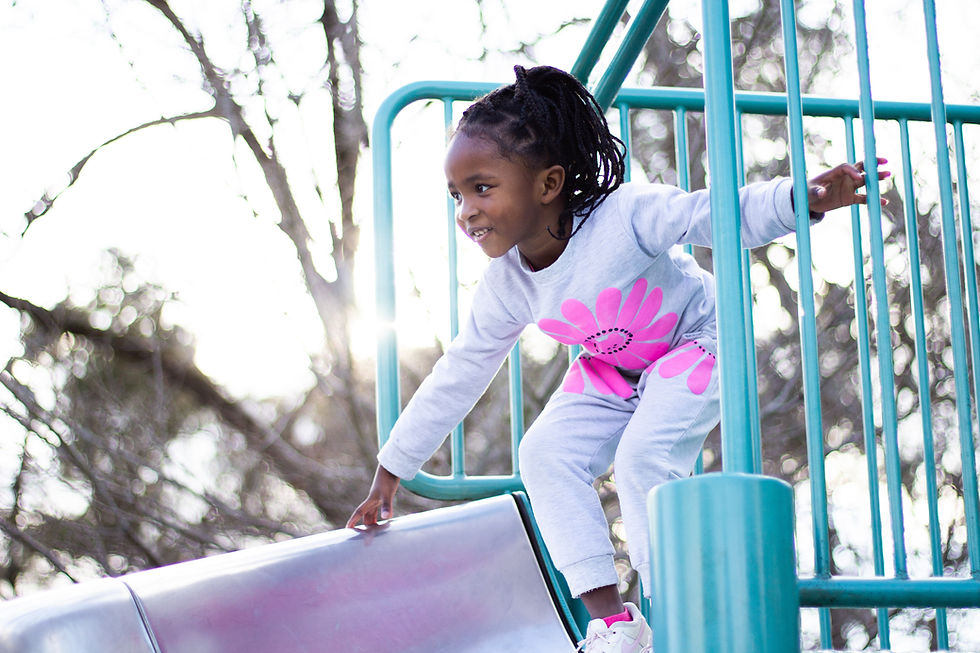
Find simple machines at the playground!
Your regular neighborhood playground is probably full of simple machines! Slides are just ramps, anything that spins is basically a wheel-and-axle, and see-saws are really levers.
Some questions to spark curiosity in your kids - Why do you go faster on a steeper slide? On a spinning merry-go-round, do you move faster if you sit on the edge or in the middle? How do you balance a see-saw? (For teachers, getting your kids to compare pushing and pulling in different directions on the playground aligns with K-PS2-1.)

Colorful Outdoor STEAM Activities for Kids

from Hands On As We Grow
This time go outside with a sprinkler! You can also use a hose spraying a fine mist. Make sure the sun is behind you, and then experiment with different angles to try to make the biggest rainbow you can!
(Teachers, this experiment supports NGSS 1-PS4-3!)


Make “Pollen” Chalk Art from the Oregon Museum of Natural and Cultural History
This STEAM activity is part chalk art and part scientific model! All you need is two different colors of chalk and a cotton ball. Draw different color chalk flowers, and then use the cotton balls as your pollinator, feeding from both color flowers. Notice how your pollinator picks up the “pollen” as it feeds!
If you’re a teacher and going outside won’t work for your class, you can try this activity with paint on paper and cotton balls. Or here’s another indoor classroom activity that uses Cheetos as the “pollen”.
(Teachers, all of these pollination models support K-ESS3-1 and 2-LS2-2.)

from Plum Landing on PBS Kids
What a super easy art activity that also demonstrates water evaporation! All you need is water, a paint brush, and a spot of sidewalk in the sun. Plus more evaporation activities with construction paper and plastic baggies. (For teachers, this aligns with NGSS standard K-PS3-1.)

For water cycle science picture books and videos that pair well with this activity check out this post!

from Kids Activities Blog
This art project shows kids the power of both sunlight and sunscreen! Let them paint on bright construction paper with a brush or fingers or even stamps, then put your paper outside. After a few hours, the paper color will have faded except where the sunscreen is. (You might keep one sheet of paper out of the sun to compare against the faded color that’s been in the Sun.) For older kids, you could experiment to see if different sunscreen brands or types last longer or react differently!

from No Time for Flashcards
Just imagine telling your kids that the Sun is so hot today, it could melt a crayon. If you happen to be in the middle of a heatwave, you could at least use the weather for a cool artsy science project, right? What a tangible way for kids to experience how the Sun’s energy is both light and heat!

Kids’ Outdoor STEM Activities for the Nature Lovers
from Cornell Lab of Ornithology
Learn more about the birds you meet on your nature walk. This free app from Cornell University will tell you what bird you’re looking at based on a photo, the sound of its birdsong, or from answering 5 simple questions (location, date, bird size, bird color, what was the bird doing). It’s supposed to be over 90% accurate!

For bird science picture books and videos that pair well with these activities, check out this post!

Take a big number nature walk
Take a nature walk and look for examples of big numbers in nature - like leaves on the tree, or blades of grass in the yard. With younger kids, you could ask them to consider whether there are more blades of grass in the yard than leaves on the tree. For older kids, you could count the leaves on one branch, then use that information to try to estimate how many leaves there are total. Who knows where your walk and conversation will take you?

Got kids that are excited about really big numbers? Here’s more books and videos to spark their curiosity!
with Ranger Zak
Take along a journal or just some blank pages on your next walk, and let kids journal about their experience as they go along!If your kids have never done a nature journal before and don’t know where to start, the friendly Ranger Zak has some fun ways to use all 5 of your senses to fill out your nature journal! (You’ll want to bring along a snack for something safe to taste.)
Identify every plant or bug you see on your next nature walk with the Seek app! It’s easiest with plants, since they stay still while you move your camera around it until the app has enough visual information to identify the species. But it’s also fun to try to use it on a bug crawling on the ground, or a butterfly while it’s drinking from a flower.
There is so much to learn about earthworms, but first you’ll need to find some! Since worms prefer dark, moist places, try looking under rocks or digging in the dirt.
But if you’d rather not dig, the UK Natural History Museum has a pretty magical way to “summon” worms out of the ground by pouring a mustard water solution (1 large tablespoon of ground mustard seed with 1.5 litres of water) into the ground.
If you want to go a step further, get your kids nature journaling about their worm encounters. Kids can draw what they see, hear, and feel. They can write down any questions they have or funny things they observe. (Teachers, have your students look for patterns in their observations like “there are more worms in dark places than sunny places” to align with NGSS K-LS1-1.)

By Jodi Wheeler-Toppen
Calling all kids who want to play with worms all day! This book is an instruction manual specially for kids to find a worm and gently interact and experiment with it.
There are instructions to shine a flashlight through a worm’s body, observe how it reacts to the smell of rubbing alcohol, and listen to the sound of a worm’s bristles scratching on paper. This one book is an entire classroom or homeschool science lesson on its own! (Teachers, the activities in this book align with NGSS K-LS1-1.)

Even more Kids Outdoor STEM Activities
from SciShow Kids
Explore your neighborhood and help the environment at the same time! This video has real practical tips to help keep storm drains in your neighborhood clear of litter, so they don’t end up in rivers, lakes, or the ocean. (Teachers, this one aligns with K-ESS3-3.)

from PBS Kids
This video shows the experiment indoors, but if you’ve already got a kids’ water table outside, that’s even more fun! Give your kids metal spoons and plastic spoons and see if they can make a conclusion that explains why one sinks and one floats.
To go the extra mile, you can practice the scientific method of defining the question, making a hypothesis, gather data, analyze the data, and make conclusions. (PBS Kids has a colorful Cat-in-the-Hat themed chart that you can use to record your data.) (Teachers, this experiment aligns with NGSS 2-PS1-1.)
from SciShow Kids
Here’s another science activity about flotation that is even more fun when you use your outdoor water table. All it takes is aluminum foil to fold a foil boat! Now here’s the science - what boat design can carry the most marbles? (Or pennies, or beans…) You could try a canoe design like these kids Sophie and Zane, or try your own design. Definitely try a flat sheet of foil or a crumpled up ball of foil too to compare with your boats! (Teachers, this engineering design activity aligns with NGSS K-2-ETS1-1.)

from SciShow Kids
Here's a basic airplane fold for younger kids to get hands on with the science of flight! You could experiment with adding a paperclip for weight, or using lighter or heavier paper.
Want to get more advanced? This ScienceMax video explains how to change your paper airplane to keep it from rolling, pitching up too fast, or turning. (Teachers, get your kids testing out these paper airplane changes on several different airplanes, then compare how the airplanes fly to align with NGSS K-2-ETS1-1.)
And if you’ve mastered a basic paper airplane already, here are folding instructions for the Sky King design that set a world record in 2009!

Whew, that’s a lot of reasons to bring your learning outside!
Have fun lighting sparks of curiosity in the great outdoors!
Amy Wung Tsao
P.S. If you enjoyed this post, sign up here with your email so you never miss an update!


Comments