
Summer STEM/STEAM Activities for Kids Round-Up (Updated for 2026!)


The summer is a great time to take kids’ science out for some fun in the sun! Make a rainbow in your classroom window or at home in your backyard. You can cool down with water play, while also learning what makes things float. Get out into nature and hunt for bees and butterflies pollinating. Plus if your family is into shark week, then I’ve got the kids’ science version of shark week for you!
Keep reading for easy, hands-on summer science experiments and summer STEAM activities for kids in your home or classroom.
Sun Powered Summer STEAM Activities for Kids

from Kids Activities Blog
This art project shows the power of both sunlight and sunscreen! Paint on bright construction paper, then leave it out in the sun. After a few hours, the color will fade except where the sunscreen is. (You might keep one control paper out of the sun to compare against the paper that faded in the sun.) Older kids could experiment with different sunscreen brands or types. (Aligns with NGSS science curriculum standards K-PS3-1.)
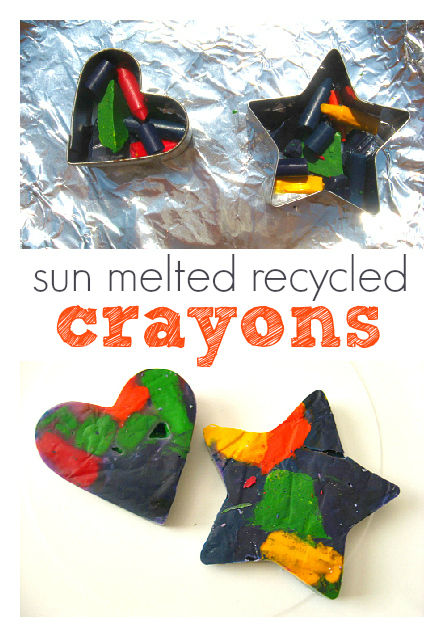
from No Time for Flashcards
Just imagine telling your kids that the Sun is so hot today, it could melt a crayon. If you happen to be in the middle of a heatwave, you could at least use the weather for a cool artsy science project, right?
Full disclosure - My crayons only partially melted after a few hours in 90°F heat. (The author of No Time for Flashcards did this in 100°F heat.) It probably would have worked better with the next activity - an easy DIY solar oven! (Aligns with NGSS science curriculum standards K-PS3-1.)
from The Space Gal, Emily Calandrelli
Got a leftover pizza box? Make cheesy nachos and smores in this solar oven with Emily Calandrelli! Common Sense Media calls Emily “the science teacher we all wish we had as young kids.”
If your kids liked this, then I highly recommend the 12 minute Emily’s Wonder Lab episode on solar ovens on Netflix. (Aligns with NGSS science curriculum standards K-PS3-1.)

Looking for more sun-powered science? Check out this round-up of STEM picture books on the Sun!
Sink or Float Water Play STEAM Activities for Kids
Sink or Float Experiment from PBS Kids
This activity is so easy to set up. Give your kids metal spoons and plastic spoons and see if they can make a conclusion that explains why one sinks and one floats!
To go the extra mile, you can practice the scientific method of defining the question, making a hypothesis, gather data, analyze the data, and make conclusions. (PBS Kids has a colorful Cat-in-the-Hat themed chart that you can use to record your data.) (Aligns with NGSS science curriculum standards 2-PS1-1.)
from Siemens Knowledge Hub
Oranges float! But did you know a peeled orange sinks, even though it weighs less without the peel? It’s because there’s lots of air bubbles in the peel that make the unpeeled orange float. This makes an orange an unexpectedly great example to show the difference between weight and density! (Aligns with NGSS science curriculum standards 2-PS1-1.)
from SciShow Kids
Make an aluminum foil boat! Whose boat can carry the most marbles? (Or pennies, or beans…) You could try a canoe design like these kids, or try your own design. Definitely try a flat sheet of foil and a crumpled up ball of foil to compare with your boats!

For more sink or float science, check out these STEM books and videos full of floating fun!
Kids Rainbow Science Activities for Summer
Make a Rainbow Indoors from SciShow Kids Make your own rainbow! You just need a sunny window, a white piece of paper, and a clear glass of water. Your kids can follow along, but also experiment with moving the glass and the paper around. Stick around to the end of the video for tips to find a natural rainbow in the sky.
(Teachers, this experiment supports NGSS 1-PS4-3!)

from Hands On As We Grow
This time go outside with a sprinkler! You can also use a hose spraying a fine mist. Make sure the sun is behind you, and then experiment with different angles to try to make the biggest rainbow you can!
(Teachers, this experiment supports NGSS 1-PS4-3!)

If your kids love rainbows (wait, are there kids who don’t love rainbows??), they’ll light up at all the rainbow kids books and videos I’ve gathered up for you here!
If your kids love rainbows (wait, are there kids who don’t love rainbows??), they’ll light up at all the rainbow kids books and videos I’ve gathered up for you here!
Bees, Butterflies, and Pollinator Kids’ Science for Summer
Take a pollinator nature walk with your nature journal and the Seek app!
Take the kids on a nature walk and let them journal about all the flowers and pollinators they see. Start to wonder out loud about which flower shapes or colors the bees like best, and which flowers the butterflies like best.
I love whipping out the Seek app on my phone to easily identify plants, insects, and animals on our nature walks. It’s easiest with plants, since they stay still while you move your camera around it until the app has enough visual information to identify the species. But you might be able to use it on a pollinator that’s landed on a flower!
(Teachers, your students’ observations support K-LS1-1 and 3-LS4-3.)

Make “Pollen” Chalk Art from the Oregon Museum of Natural and Cultural History
This STEAM activity is part chalk art and part scientific model! All you need is two different colors of chalk and a cotton ball. Draw different color chalk flowers, and then use the cotton balls as your pollinator, feeding from both color flowers. Notice how your pollinator picks up the “pollen” as it feeds!
If you’re a teacher and going outside won’t work for your class, you can try this activity with paint on paper and cotton balls. Or here’s another indoor classroom activity that uses Cheetos as the “pollen”.
(Teachers, all of these pollination models support K-ESS3-1 and 2-LS2-2.)
Build a Beehouse! from Scishow Kids
Ready to go beyond learning about pollinators to helping pollinators? All you need is a tin can, 2 toilet paper rolls, paper and glue. This activity is to build a beehouse for mason bees, which do not sting like other bee species do. Building pollinator homes is good for the environment, and supports K-ESS3-3 in your science curriculum!

After you’ve tried these activities, check out more kids books and videos to spark curiosity about bees, butterflies, flowers and pollination science!
Shark Week Science for Kids this Summer

Shark Buoyancy Experiment from Little Bins for Little Hands
Here’s a new sink and float science activity, with a shark twist! All it takes is a couple empty plastic bottles, oil, and water. You can also try this same experiment with balloons, but small plastic bottles sounds a lot less messy to me.
(Teachers, learning about how the shark’s oily liver helps it float supports NGSS DCI LS1.A.)

Want more shark science for kids? I’ve picked out the coolest shark science books and videos for kids here!
If you enjoyed this post, sign up here with your email, so you never miss an update!
Have a great summer filled with fun and sparks of curiosity!
Amy Wung Tsao


Comments